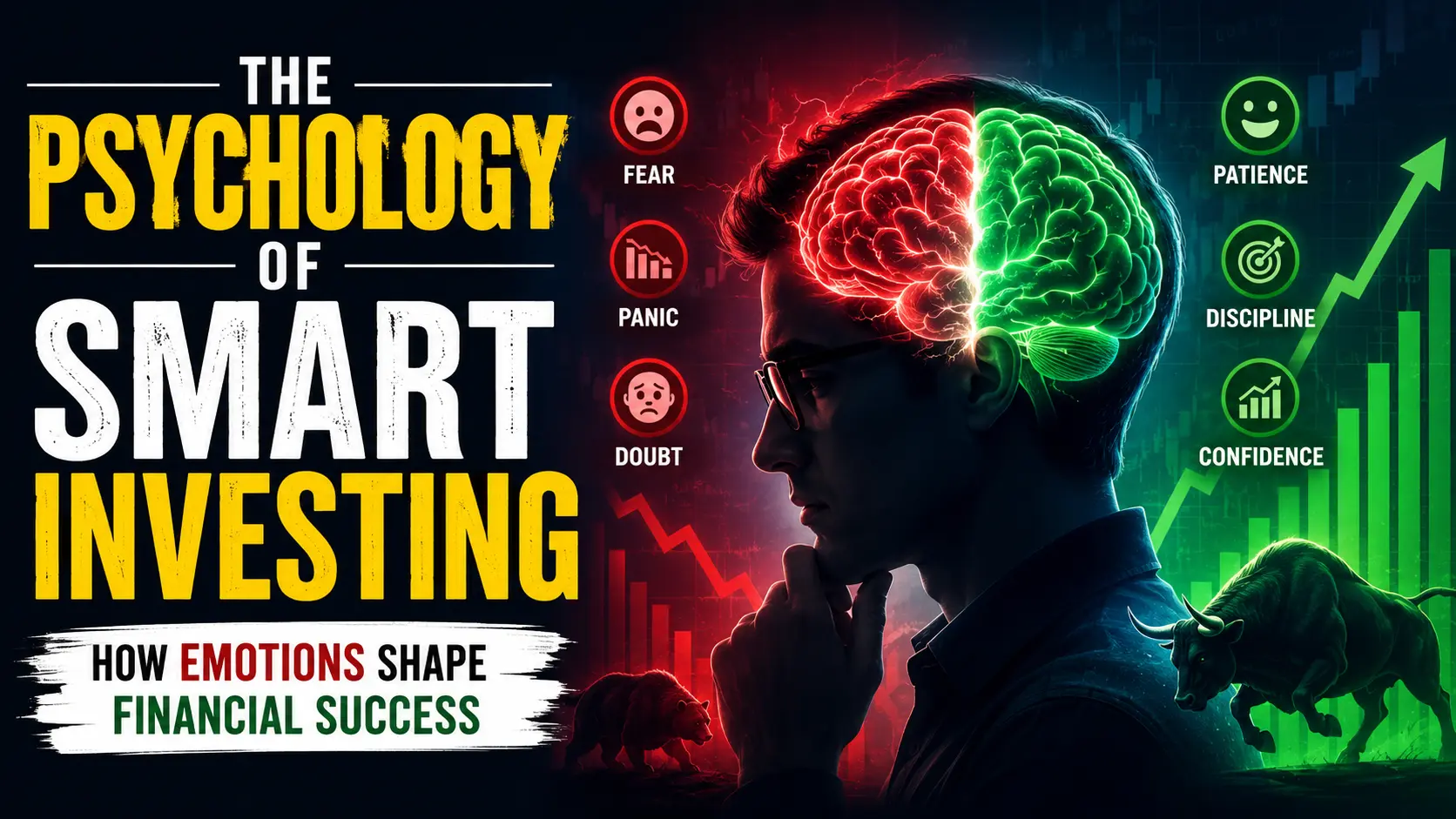
Investing is often described as a numbers game filled with charts, percentages, profits, and losses. While financial knowledge and market research are important, one factor influences investment success more than most people realize: psychology. The emotions and mental habits of investors play a huge role in determining whether they build long-term wealth or suffer repeated financial mistakes.
Many people believe successful investing requires predicting the market perfectly. In reality, successful investors usually focus on discipline, patience, and emotional control. Fear, greed, impatience, and overconfidence can easily push investors toward poor decisions that damage their portfolios. Understanding the psychology behind investing can help people make smarter choices and avoid common traps.
This article explores how emotions influence investing, why psychology matters in financial markets, and practical strategies for becoming a smarter investor.
Why Psychology Matters in Investing
Financial markets are driven by human behavior. Every stock purchase, cryptocurrency trade, or real estate investment involves emotions and expectations. Because people react emotionally to news, trends, and market movements, prices often rise and fall based on psychology rather than pure logic.
For example, during market crashes, fear spreads quickly. Investors panic and sell their assets even when the long-term value remains strong. On the other hand, during market booms, excitement and greed encourage people to buy overpriced assets without proper research.
Smart investors understand that controlling emotions is just as important as understanding market fundamentals.
The Role of Fear in Investing
Fear is one of the strongest emotions in financial markets. It appears most often during market downturns or economic uncertainty.
When stock prices drop sharply, many investors become worried about losing money. Instead of following a long-term strategy, they sell investments out of panic. Unfortunately, panic selling often locks in losses and prevents investors from benefiting when the market recovers.
Common Fear-Based Mistakes
- Selling stocks during temporary market declines
- Avoiding investments completely after one bad experience
- Keeping too much money in savings instead of investing
- Constantly checking portfolios and reacting emotionally
Fear can also stop people from investing at all. Many individuals keep their money in low-interest accounts because they are afraid of market volatility. While this feels safe in the short term, inflation slowly reduces purchasing power over time.
Successful investors learn to manage fear by focusing on long-term goals rather than short-term price movements.
How Greed Influences Investment Decisions
Greed is another powerful emotional force in investing. It becomes especially dangerous during bull markets when prices rise rapidly and everyone seems to be making easy money.
Greedy investors often chase trends without understanding the actual value of an asset. They buy stocks, cryptocurrencies, or other investments simply because prices are increasing. This behavior can create financial bubbles that eventually collapse.
Signs of Greed in Investing
- Investing without proper research
- Taking excessive financial risks
- Borrowing money to invest aggressively
- Believing profits will continue forever
- Ignoring warning signs in the market
Many investment bubbles throughout history were fueled by greed. Investors became overly optimistic and ignored risks because they expected prices to rise endlessly.
Smart investors avoid emotional excitement and stick to rational decision-making.
The Danger of Overconfidence
Overconfidence occurs when investors believe they can consistently outperform the market or predict future movements accurately.
After experiencing a few successful trades, some investors begin taking unnecessary risks. They may ignore diversification, invest heavily in one asset, or assume they cannot lose money.
Problems Caused by Overconfidence
- Poor risk management
- Ignoring expert advice
- Excessive trading
- Taking concentrated positions
- Underestimating market uncertainty
Research shows that overconfident investors often trade more frequently, leading to higher fees and lower long-term returns.
The market is unpredictable, and even experienced investors make mistakes. Humility is an important quality for long-term investment success.
Patience: The Most Valuable Investing Skill
While emotions cause many investing mistakes, patience is often the key to financial growth.
The most successful investors understand that wealth usually grows slowly over time through consistency and compound growth. Instead of trying to get rich quickly, they focus on steady progress.
The Power of Long-Term Investing
Long-term investing allows money to grow through compounding. Compounding means earning returns not only on the original investment but also on previous profits.
For example, an investor who consistently invests over 20 years may see significant portfolio growth even if markets experience temporary declines along the way.
Patience helps investors:
- Avoid emotional decisions
- Ignore short-term noise
- Benefit from market recoveries
- Build sustainable wealth
- Reduce unnecessary trading
Many famous investors emphasize patience as one of the most important financial habits.
The Importance of Diversification
Diversification is a strategy that reduces risk by spreading investments across different assets, industries, or regions.
Instead of placing all money into one stock or investment type, diversified investors build balanced portfolios. This approach protects against major losses if one investment performs poorly.
Benefits of Diversification
- Lower overall risk
- More stable returns
- Reduced emotional stress
- Protection during market downturns
- Improved long-term consistency
Diversification does not eliminate risk completely, but it helps investors avoid catastrophic losses.
Smart investors understand that protecting wealth is just as important as growing it.
How Social Media Affects Modern Investors
In today’s digital world, social media strongly influences investment behavior. Platforms filled with financial influencers, viral trends, and market predictions can create emotional reactions among investors.
Many people invest based on online hype without understanding the underlying asset. Viral investing trends often encourage short-term speculation rather than careful research.
Risks of Social Media Investing
- Following unreliable advice
- Chasing trending assets
- Emotional buying and selling
- Unrealistic profit expectations
- Increased impulsive trading
While social media can provide useful information, investors should always verify facts and conduct independent research before making decisions.
Building a Strong Investing Mindset
Successful investing requires more than financial knowledge. It also requires the right mindset.
Habits of Smart Investors
1. Setting Clear Goals
Investors with defined goals are less likely to react emotionally. Goals may include retirement savings, buying a home, or building long-term wealth.
2. Following a Strategy
Having a clear investment strategy helps prevent impulsive decisions during market volatility.
3. Continuing Financial Education
Learning about markets, economics, and personal finance improves confidence and decision-making.
4. Accepting Market Volatility
Price fluctuations are normal in investing. Smart investors understand that temporary losses are part of long-term growth.
5. Managing Emotions
Recognizing emotional reactions helps investors stay disciplined during uncertain periods.
Lessons from Famous Investors
Many legendary investors have shared valuable lessons about psychology and discipline.
Warren Buffett
Warren Buffett is known for emphasizing patience, value investing, and emotional control. He famously advises investors to be fearful when others are greedy and greedy when others are fearful.
Benjamin Graham
Benjamin Graham taught investors to focus on intrinsic value rather than emotional market behavior.
Peter Lynch
Peter Lynch encouraged investors to understand what they invest in and avoid emotional speculation.
Their success demonstrates that psychology and discipline often matter more than short-term predictions.
Common Investing Mistakes to Avoid
Many investors repeat the same mistakes because emotions influence decision-making.
Major Mistakes Include:
- Investing without research
- Panic selling during crashes
- Chasing quick profits
- Ignoring diversification
- Trying to time the market perfectly
- Following crowd behavior blindly
- Investing based purely on emotions
Avoiding these mistakes can significantly improve long-term financial outcomes.
Conclusion
Investing is not just about money—it is about behavior, discipline, and mindset. Fear, greed, overconfidence, and impatience can push investors toward costly decisions, while patience and emotional control create long-term success.
The smartest investors understand that markets will always rise and fall. Instead of reacting emotionally, they stay focused on their goals, follow a clear strategy, and continue learning over time.
Building wealth through investing is rarely about getting rich overnight. It is about making consistent, rational decisions and allowing time to work in your favor. By mastering the psychology of investing, anyone can improve their financial future and become a more confident investor.